Bad hires and bad tenants cost you money, time, and peace of mind. You need answers fast, but you can't afford to guess.
That is exactly where background screening services earn their keep. They turn scattered records into one clear report you can act on.
Here's the catch: speed means nothing if the data is wrong or the process breaks the law. You want both accuracy and compliance, delivered before your window closes.
At Smart & Fast Background Checks, we deliver accurate, comprehensive reports fast so you decide with confidence. Let's break down how to use screening the smart way.
Think of a background check as a fact-checker for a decision. It confirms that a person is who they claim to be.
A quality report pulls from trusted sources and verifies the details that matter. That includes identity, history, and records tied to your specific decision.
Most providers offer a menu of checks you can combine. Industry vendors commonly include criminal record searches, employment and education verifications, drug testing, and motor vehicle reports (SHRM Vendor Directory).
You rarely need every check. You need the right ones for your situation.
Stacking the right checks gives you a full picture instead of a lucky guess. That is the whole point of comprehensive reporting.
We dig deep to uncover what matters for your decision, not just the easy surface data. More on choosing the right mix below.
Here's the truth most people miss: screening is not only for corporate HR teams. The need shows up across many roles.
Employers use it to hire safely. Landlords use it to protect their properties. Nonprofits use it to protect vulnerable people.
A single bad hire drains payroll and morale. Screening reduces that risk before an offer goes out.
Major providers pitch this directly, promising to help you make more informed decisions about job candidates. Speed here shortens your time to hire.
Example: A small clinic hiring a front-desk worker runs an identity check, county criminal search, and employment verification. The report clears in a day, and the offer goes out before the top candidate accepts elsewhere.
A vacant unit costs you rent every day. But the wrong tenant costs you far more.
A screening report on identity and record history helps you fill units with confidence. You protect your investment and your other tenants.
Organizations that serve kids, patients, or seniors carry extra duty of care. Screening volunteers is a baseline safeguard.
Specialized providers screen employees and volunteers within 24 hours (Bchex). That fast turnaround keeps programs staffed without dropping safety standards.
You might vet a contractor, a nanny, or a new business partner. Individuals also check their own records before applying somewhere.
Whatever your reason, the goal is the same. You want reliable, nationwide information you can trust.
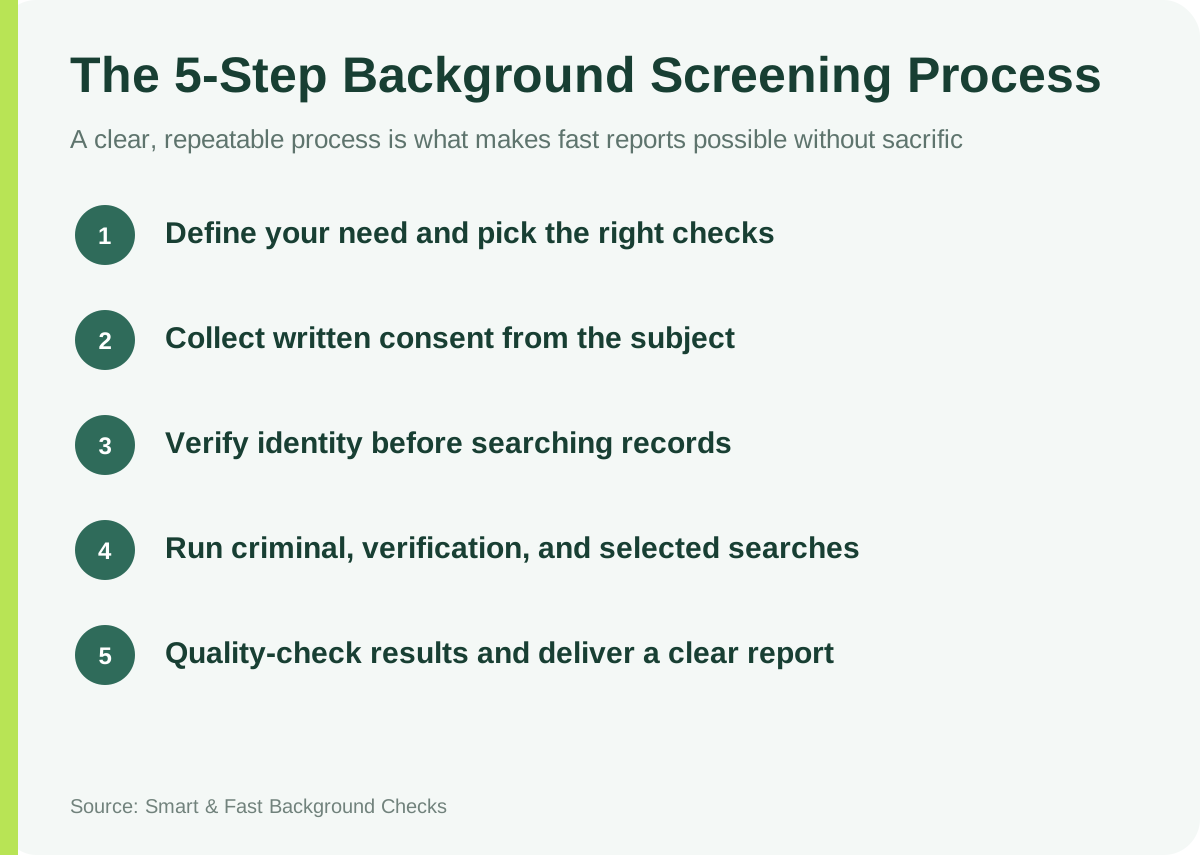
Let's pull back the curtain. A good process is simple, transparent, and fast.
When you know each step, you spot delays and problems early. That keeps your decision on schedule.
We deliver results in hours, not days because every step is tuned for speed. Turnaround is usually 24 to 48 hours.
Delays usually trace to missing consent, incomplete applicant data, or slow third-party verifiers. Fix these on the front end.
Ask for full legal names, dates, and contact details up front. That single habit saves you repeated back-and-forth later.
Here's the false trade-off that trips up buyers. People assume fast reports must be sloppy reports.
That is not how quality screening works. Speed comes from process, not from skipping verification.
Accuracy comes from verified data pulled from trusted sources, which we treat as non-negotiable (Smart & Fast Background Checks). Speed comes from smart workflows around that data.
Leading vendors sell both at once, promising fast and accurate background checks to reduce time to hire (ADP). The market expects both, and so should you.
Slow down if a provider dodges these questions. Cheap and instant can hide real gaps.
Want proof a provider stands behind its work? Some competitors offer a satisfaction guarantee and a price-match guarantee (Bchex). Ask what backs the report you buy.
Compliance is not paperwork you can ignore. It is the rulebook that keeps your decisions legal.
Miss a step and you risk lawsuits, fines, and lost trust. The good news is the core rules are learnable.
Before you run an employment check, you must disclose it and get written consent. This is a foundational requirement of the screening process.
Full-service providers build this in, helping you hire quickly and compliantly (Accurate). Never treat consent as optional.
If a report leads you to reject someone, the law requires specific steps. You must give notice and a chance to dispute errors.
Example: An employer plans to decline a candidate over a record. They send a pre-adverse notice with a copy of the report, wait a reasonable period, then send a final adverse notice if nothing changes.
This process protects the applicant and shields you from claims. Skipping it is a common, costly mistake.
Background reports hold sensitive personal data. Protecting it is part of compliance and good practice.
We keep information protected with enterprise-grade encryption on every report. Ask any provider how they secure your data.
Not all providers fit your needs. The best choice depends on your volume, roles, and timelines.
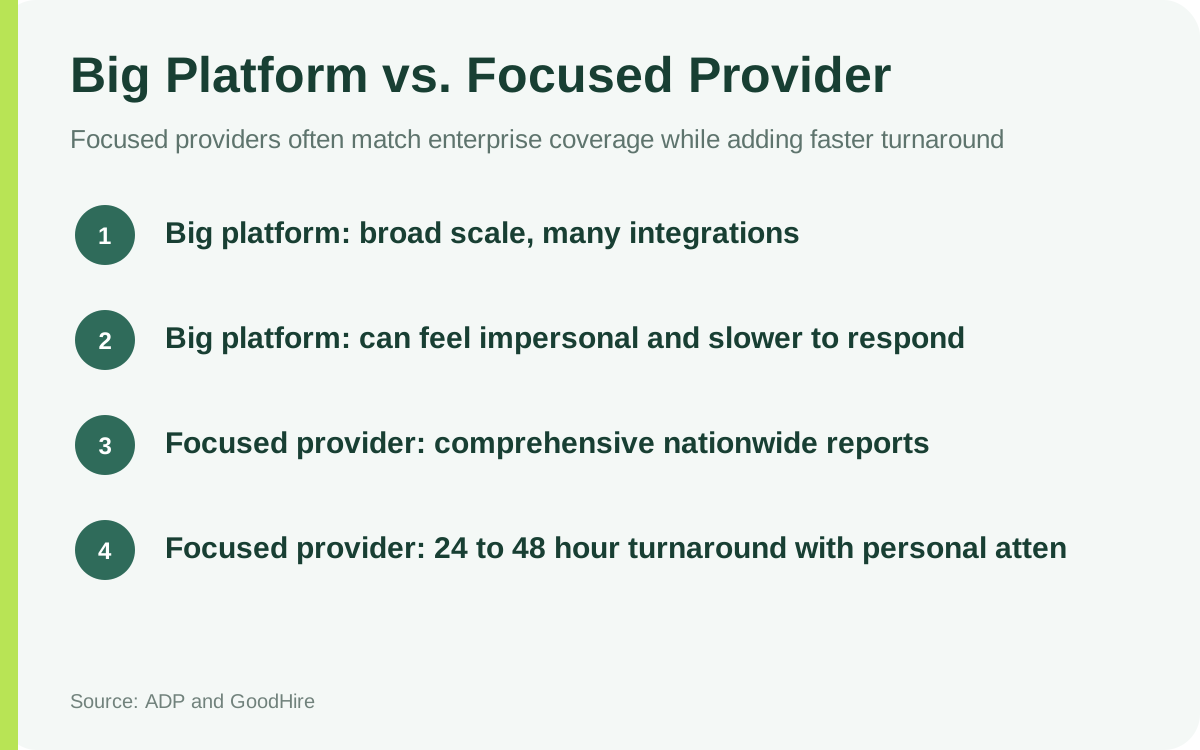
Big national platforms serve giant enterprises well. But smaller, responsive providers often win on attention and turnaround.
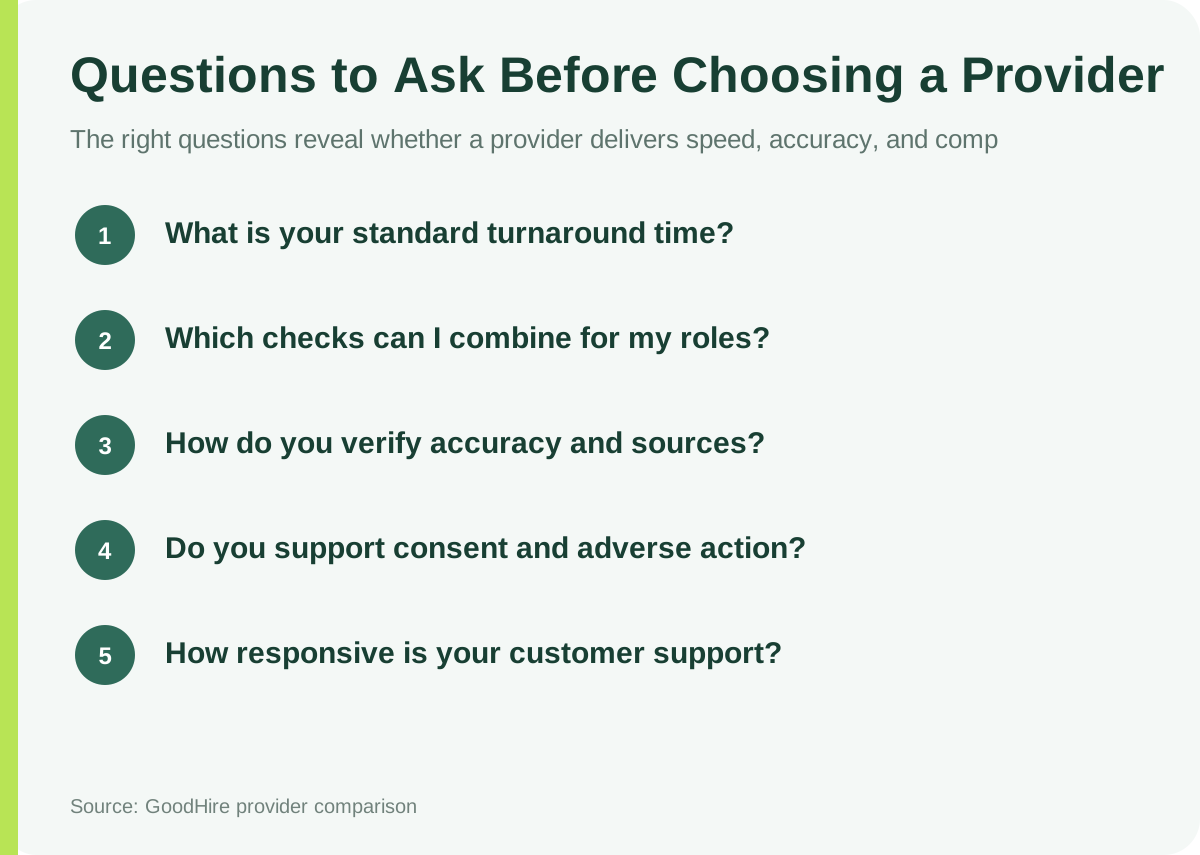
Use this checklist to compare vendors fairly. The answers reveal who actually fits you.
Enterprise tools scale well but can feel impersonal. Reviewers note top providers offer many screening types, from criminal history to drug testing (GoodHire).
We combine that comprehensive, nationwide coverage with personal attention. You get accuracy you can count on plus responsive help when questions arise.
Ready to see the difference? Request a report and judge the speed and clarity yourself.
Even smart teams stumble on screening. Most errors are preventable with a little planning.
Here's what I want you to sidestep. These habits cause delays, disputes, and legal exposure.
Running the same package for every role wastes money and misses risk. Match checks to the job's real duties.
A driver needs a motor vehicle report. A cashier may not. Tailor the mix.
This is the fastest path to a lawsuit. Build both steps into your standard workflow.
Document every disclosure and notice. Paper trails protect you.
Bargain checks often skip verification or use stale data. That saves pennies and risks dollars.
Weigh cost against accuracy and support. The right partner pays for itself by preventing one bad decision.
Many checks finish within 24 to 48 hours, and some volunteer checks complete in 24 hours (Bchex). Timing depends on the searches selected and how fast verifiers respond.
Reports can include criminal records, employment and education verifications, motor vehicle reports, and drug testing (SHRM Vendor Directory). You choose the checks that fit your decision.
Yes. For employment screening, you must disclose the check and get written consent, which helps you hire compliantly (Accurate).
No. Speed comes from strong workflows, while accuracy comes from verified data from trusted sources (Smart & Fast Background Checks).
Yes. Individuals can screen contractors, caregivers, or their own records to prepare for applications.
Here's the short version. Good background screening services give you speed, accuracy, and compliance together, not one at the expense of the others.
Match your checks to the decision. Get consent, verify identity, and follow adverse action rules every time.
Choose a partner that pairs comprehensive nationwide data with fast turnaround and real support. That combination protects your money and your reputation.
Ready to decide with confidence? Start your background screening with Smart & Fast Background Checks and get a clear, compliant report, usually within 24 to 48 hours.
Say a growing property-management company hires three people in one week. Each role needs a different mix, and treating them the same would waste money or miss risk.
For a leasing agent, they run identity verification, a county criminal search, and employment verification. For a maintenance tech who drives a company van, they add a motor vehicle report and drug testing. For a part-time volunteer at a resident event, they order a fast criminal check that clears in 24 hours (Bchex).
The lesson is simple. Start with the decision, list the real duties, then pick checks that map to those duties. This keeps each report relevant and defensible.
Interviews test communication and fit, but they cannot verify facts. A confident candidate can still misstate a title, a degree, or a start date.
That is why providers pair verification with records searches. Employment and education verifications confirm the resume claims your interview cannot (SHRM Vendor Directory). Screening does not replace your judgment; it protects it with evidence.
This worry made sense a decade ago. Today, fast and accurate checks are the market standard, built to reduce time to hire (ADP).
The delays that remain usually come from your side, not the vendor's. Collect full legal names, dates, and contact details at application. That single habit removes most back-and-forth and keeps reports on the 24-to-48-hour track.
A report only helps if you interpret it correctly. Raw records without context can lead to unfair or illegal decisions.
Treat every finding as a prompt to ask questions, not an automatic verdict. Context and relevance decide what a record actually means for the role.
A record on a report is data, not a decision. You still weigh how it relates to the job and how recent it is.
Example: A ten-year-old minor offense may have little bearing on an office role. A recent, directly related offense may matter far more. Judge relevance, not just presence.
Sometimes a report contradicts what the candidate told you. Do not assume the worst immediately.
Discrepancies can come from name matches, clerical errors, or outdated records. This is exactly why a dispute and correction process exists. Give the person a fair chance to explain before you finalize anything.
Keep a clear record of what you ordered, what you found, and why you decided as you did. This paper trail protects you if a decision is ever questioned.
For adverse decisions, save copies of the pre-adverse notice, the report, and the final notice. Consistent documentation turns a legal requirement into a routine habit that shields your organization.
Pause the decision and let the dispute process run. A quality provider will re-verify the contested item against its sources.
If the record was wrong, the report gets corrected and you proceed on accurate data. If it stands, you continue the adverse action steps you already started. Either way, you stay both fair and compliant, which is the whole goal of screening done right.