One bad hire can cost you money, morale, and trust. A smart screening process protects all three.
Running background checks helps ensure the safety of your workforce and the people you serve, according to New York's Justice Center. That safety starts before an offer letter goes out.
You do not have to choose between speed and accuracy. With the right process, you get both.
Here's the truth: most hiring delays come from confusion, not caution. Let's fix that.
A criminal background check for employees verifies who you're really hiring. It confirms identity, surfaces relevant criminal history, and protects your team.
Skipping this step is a gamble. You risk negligent hiring claims, workplace safety issues, and expensive turnover.
Running checks helps ensure the safety of individuals and the workforce, as New York's Justice Center notes for special-needs care settings. The same logic applies across nearly every industry.
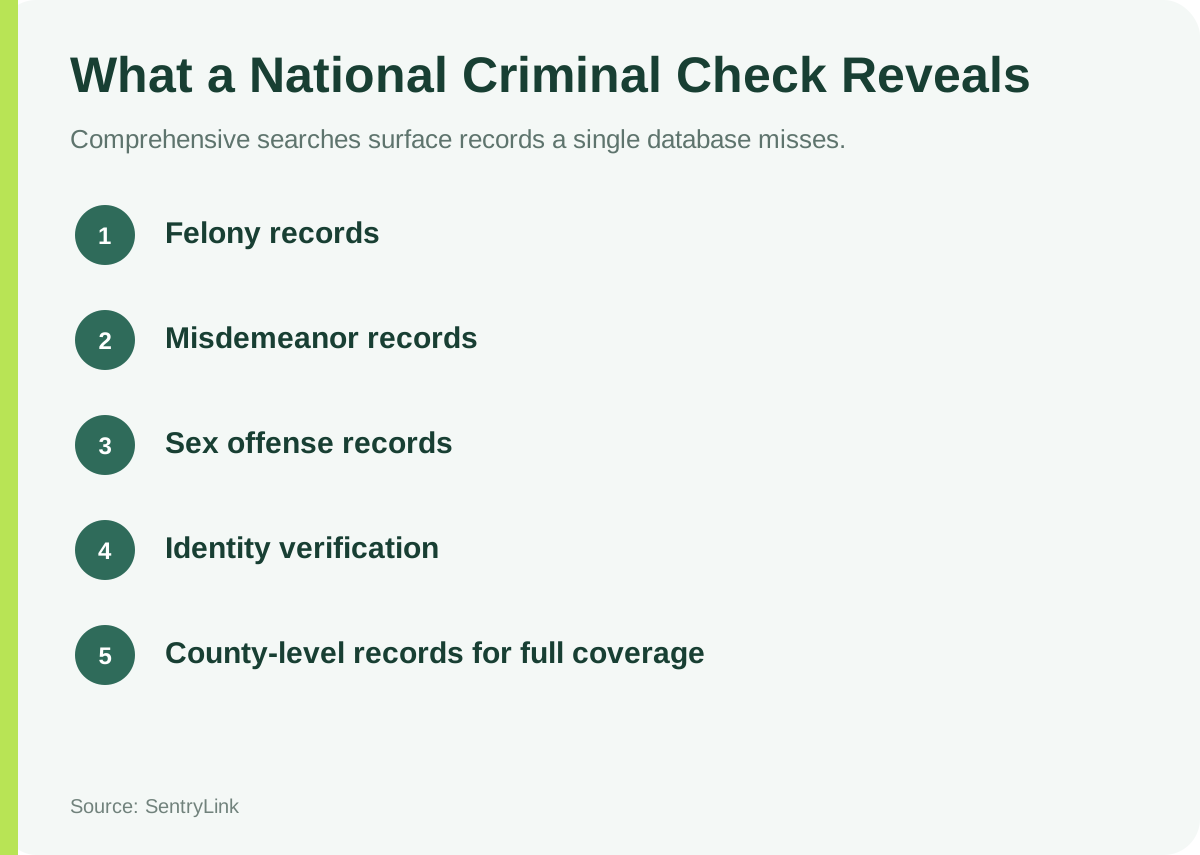
A solid criminal report shows more than a single county record. A national criminal search can surface felonies, misdemeanors, sex offenses, and more, according to SentryLink.
Depth matters. A candidate might look clean in one county and carry records in another.
That's why comprehensive, nationwide reports matter. Smart & Fast Background Checks digs deep to uncover what matters for your decision.
Employers and HR teams need them to hire safely. But they're not alone.
Landlords screen tenants. Healthcare and volunteer groups vet caregivers. Small businesses protect customers and staff.
Even individuals use checks for peace of mind. If a decision carries risk, screening lowers it.
Want to know the most expensive hire? The one you never screened.
A negligent hiring lawsuit, a theft incident, or a workplace safety failure can dwarf any screening fee. The math rarely favors shortcuts.
Compare that to the actual price of a check. Screening is cheap insurance against big losses.
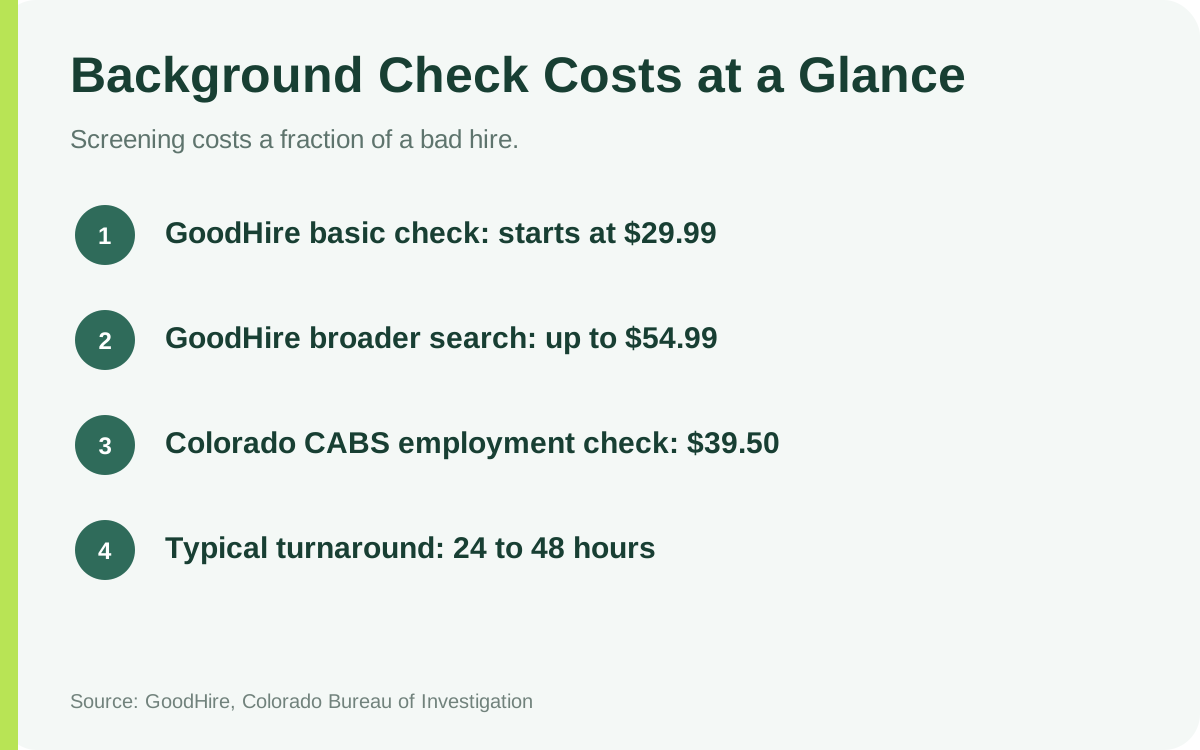
Basic criminal background checks start at $29.99 with GoodHire, ranging up to $54.99 for broader county, federal, and multistate searches, according to GoodHire. Government-run options exist too.
Colorado's employment background check through CABS runs $39.50, per the Colorado Bureau of Investigation. Prices vary by scope and state.
Here's the point: a report costs a fraction of a mistake. Budget for it like you budget for locks on the door.
Speed is money too. Every day a role stays open, work piles up and good candidates take other offers.
Slow screening kills momentum. Fast, accurate reports keep your pipeline moving.
That's the balance to chase: thorough checks delivered in hours, not weeks.
Let's get practical. A clean process removes guesswork and keeps you compliant.
Think of screening as a repeatable checklist, not a scramble. Do it the same way every time.
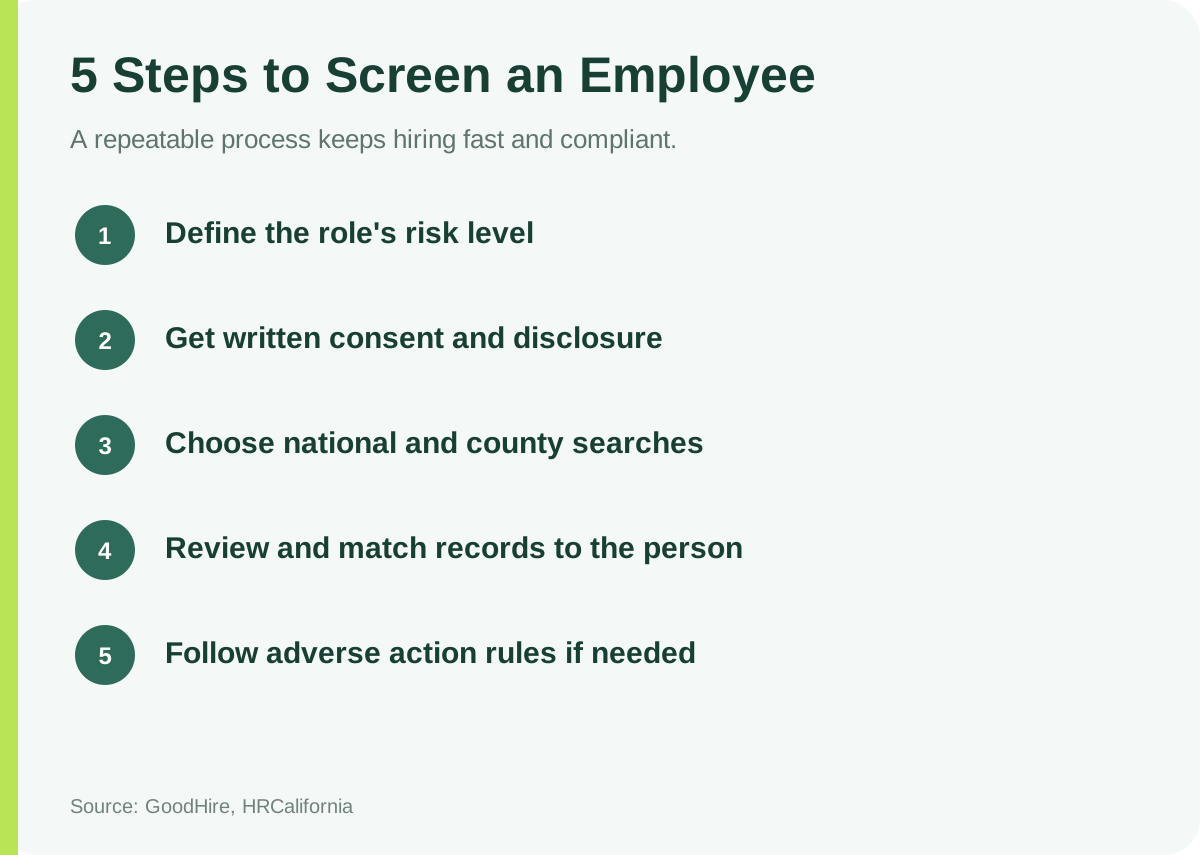
Below is a simple, defensible sequence you can follow today.
Example: A property manager screening a maintenance worker adds a county criminal search where the applicant lived, plus a national search. That catches records a single database might miss.
Not every role needs the same depth. A volunteer coach and a finance manager carry different risks.
California employers may conduct a variety of background checks and tests during hiring, per HRCalifornia. Pick the checks that fit the actual duties.
Flexible checks save money and time. You screen for what matters, not everything under the sun.
Here's where many employers stumble. Compliance feels complicated, but the core rules are clear.
The Fair Credit Reporting Act governs how you use consumer reports for hiring. Follow it, and you protect both the candidate and yourself.
Three steps keep you on track: disclose, authorize, and handle adverse action correctly.
Before you pull a report, give the candidate a clear, standalone disclosure. Then get written permission.
Don't bury it in an application. Keep it separate and simple.
This one step prevents most compliance complaints. Skip it, and your whole process is exposed.
If a report leads you to reject a candidate, the law requires a process. You send a pre-adverse notice with a copy of the report.
You give the person time to respond or dispute errors. Then you send a final adverse action notice if you proceed.
Fairness is the goal. People deserve a chance to correct mistakes in their records.
State laws add layers on top of federal rules. Some limit how far back you can look or which records you can use.
California, for example, sets specific rules around background checks in hiring, per HRCalifornia. Ban-the-box laws also affect timing.
When in doubt, ask a professional. A short compliance review beats a costly lawsuit.
Many employers believe fast screening means sloppy screening. That belief costs them good hires.
The reality is different. Modern technology and solid research deliver both speed and depth.
Smart & Fast Background Checks combines the personal attention of a small provider with accurate, nationwide reports usually delivered in 24 to 48 hours.
Great candidates rarely wait. If your screening drags on, they accept another offer.
Reports delivered in hours, not days, keep your hiring on schedule. That's a core promise on the Smart & Fast homepage.
Fast results protect your pipeline and your reputation with candidates.
A wrong record attached to the wrong person creates real harm. Verified data from trusted sources prevents that.
Accuracy means matching records to identity and confirming details. It's the difference between a helpful report and a liability.
Trustworthy data is the whole point. Speed without accuracy is just a fast mistake.
Even careful employers slip up. The good news? Most mistakes are easy to prevent.
Let's break down the traps that trip up hiring teams.
Fix these, and your process gets stronger overnight.
A single national database misses local records. Court data isn't always uploaded everywhere.
Layer your searches. Pair a national scan with county-level checks where the candidate lived and worked.
A national criminal check shows felonies, misdemeanors, and sex offenses, per SentryLink. Add county searches to close the gaps.
Not every record is relevant to every job. A decades-old minor offense may have nothing to do with the role.
Use individualized assessment. Consider the nature of the offense, time passed, and the job's duties.
This approach is fairer and reduces discrimination risk. It also widens your talent pool.
If you can't show your process, you can't defend it. Keep records of consent, reports, and decisions.
Documentation is your safety net. It proves you followed a consistent, lawful process.
Set up a simple file for each candidate. Future you will be grateful.
Not all providers are equal. The right partner saves you time and stress.
Look past price alone. Consider accuracy, speed, support, and compliance features.
Ask hard questions before you commit. A cheap report that's slow or wrong helps no one.
Smart & Fast Background Checks protects every report with enterprise encryption. Your candidate data stays locked down.
Large providers offer scale but often lose the personal touch. Boutique providers offer attention but sometimes lack reach.
The sweet spot combines both. You want small-provider responsiveness with nationwide accuracy.
That's exactly the gap Smart & Fast fills. Clear results, real support, and reports you can trust.
Here's the bottom line in one breath. A criminal background check for employees protects your team, your customers, and your business at a fraction of the cost of a bad hire.
Do it right: get consent, layer your searches, follow FCRA and state rules, and choose a fast, accurate provider. Speed and accuracy are not a trade-off when your process is solid.
Ready to hire with confidence? Start your background check with Smart & Fast Background Checks and get comprehensive reports usually delivered in 24 to 48 hours.
How much does a criminal background check for employees cost? Basic checks start around $29.99 and range to $54.99 for broader searches, per GoodHire. Government options like Colorado's CABS cost $39.50, per the Colorado Bureau of Investigation.
How long does a background check take? It depends on the searches and provider. Smart & Fast reports usually arrive in 24 to 48 hours without cutting compliance corners.
Do I need the candidate's permission? Yes. Federal law requires clear disclosure and written authorization before you pull a report.
What does a national criminal check include? It can show felonies, misdemeanors, sex offenses, and more, according to SentryLink. Pair it with county checks for full coverage.
Can a record automatically disqualify someone? No. Use individualized assessment based on the offense, time passed, and job duties to stay fair and compliant.
Take the next step today. Contact Smart & Fast Background Checks and screen your next hire the fast, compliant way.
Picture a small shop hiring a part-time cashier who handles cash daily. The role's risk level is moderate, so a national criminal search plus county checks make sense.
You send a standalone disclosure, collect written consent, then order the reports. Results arrive in 24 to 48 hours, showing a clean national scan and one old, unrelated misdemeanor.
Because the offense has nothing to do with cash handling, you proceed with the hire. The process was fast, fair, and fully documented.
Now consider a candidate who has lived in three states over five years. A single-county search would leave two-thirds of their history invisible.
You add county searches in each prior residence plus a national scan. That layered approach surfaces a record that a single database missed.
A national criminal check shows felonies, misdemeanors, and sex offenses, per SentryLink. Combined with county data, you get the full picture before deciding.
Small teams often assume screening is overkill. The opposite is true.
One bad hire hurts a five-person shop far more than a five-hundred-person company. There's no bench to absorb the damage.
Screening costs a fraction of a mistake, starting around $29.99 per GoodHire. For a small business, that's the cheapest insurance you'll ever buy.
The rules feel intimidating from the outside. In practice, they reduce to three habits: disclose, authorize, and handle adverse action correctly.
California employers navigate additional state-specific rules during hiring, per HRCalifornia. A good provider builds these steps into the workflow so you don't miss them.
Follow the checklist every time and compliance becomes routine, not a burden.
Screening works best when it's a fixed step, not an afterthought. Bake it into your process and it stops feeling like extra work.
Decide where in your funnel the check happens. Most employers screen after a conditional offer to respect ban-the-box timing.
Consistency is your legal armor. Screen every candidate for a given role the same way, every time.
Set a screening standard for each job type before you post it. A finance manager gets deeper searches than a remote intern.
This prevents ad-hoc decisions that invite discrimination claims. It also speeds things up, since the searches are decided in advance.
Write it down. A one-page screening policy per role keeps your team aligned and defensible.
Sometimes a report stalls. Usually it's a court backlog or a common-name mismatch needing verification.
Don't panic or skip steps. Confirm the identity details you submitted were accurate and complete.
Ask your provider for a status update. Responsive support, a hallmark of Smart & Fast Background Checks, turns a delay into a quick fix rather than a dead end.
A candidate may claim a record isn't theirs or is outdated. This is exactly why adverse action rules exist.
Send the pre-adverse notice with a copy of the report and give them time to respond. Errors get corrected before you make a final call.
Fairness protects everyone. A clean dispute process shields the candidate from mistakes and shields you from liability.
A background check is a snapshot of one moment in time. It doesn't expire on paper, but its usefulness fades.
For ongoing roles, many employers re-screen periodically to catch new records. How often depends on the role's risk and your industry rules.
Set a re-screening cadence for high-trust positions rather than relying on a single check from years ago.
A national search scans broad databases for records across many jurisdictions. It's fast and wide but can miss recent or unuploaded court data.
A county check pulls directly from local court records where the person lived. It's precise but narrow in scope.
Use both together. The national scan flags leads, and county searches confirm the details that matter for your decision.