
Your volunteers are the heartbeat of your mission. They coach kids, feed families, and staff hotlines.
But every unchecked volunteer is a question mark. And question marks near vulnerable people are a risk you cannot afford.
A strong volunteer background check service turns that risk into confidence. It confirms who someone is before you trust them with your community.
Here's the truth most leaders miss: screening is not about suspicion. It's about protecting the people you serve and the reputation you've built.
Think of it as a seatbelt. You hope you never need it, but you buckle up every single time.
This guide breaks down what a modern screening service does, how to run it right, and how to move fast without cutting corners.
Volunteer organizations often work with children, seniors, and people in crisis. That access demands trust, and trust demands verification.
Volunteer background checks are structured screening measures that help you confirm whether a prospective volunteer can be trusted with your mission, according to VolunteerHub.
Here's what most people overlook: one bad placement can undo years of goodwill.
A single incident can trigger lawsuits, lost funding, and shaken community confidence. Screening is your first line of defense.
Imagine a youth sports league that skips checks to save time. A volunteer with a disqualifying history slips through.
The fallout is not just legal. It's parents pulling their kids, sponsors walking away, and headlines you can't take back.
Professional screening providers exist precisely to prevent this. Solutions for nonprofit organizations and volunteer programs support informed decisions and strengthen community trust, notes First Advantage.
The lesson is simple: prevention costs a fraction of recovery.
Donors give because they believe in your integrity. Volunteers show up because they feel safe.
Screening protects both relationships at once. It signals that you take safety seriously.
Verified Credentials frames volunteer screening as a way to ensure safe and trustworthy environments for your organization, per Verified Credentials.
That trust is hard to build and easy to lose. Guard it.
Not all checks are equal. Knowing what's inside a report helps you match the check to the role.
Let's cut through the jargon so you know exactly what you're buying.
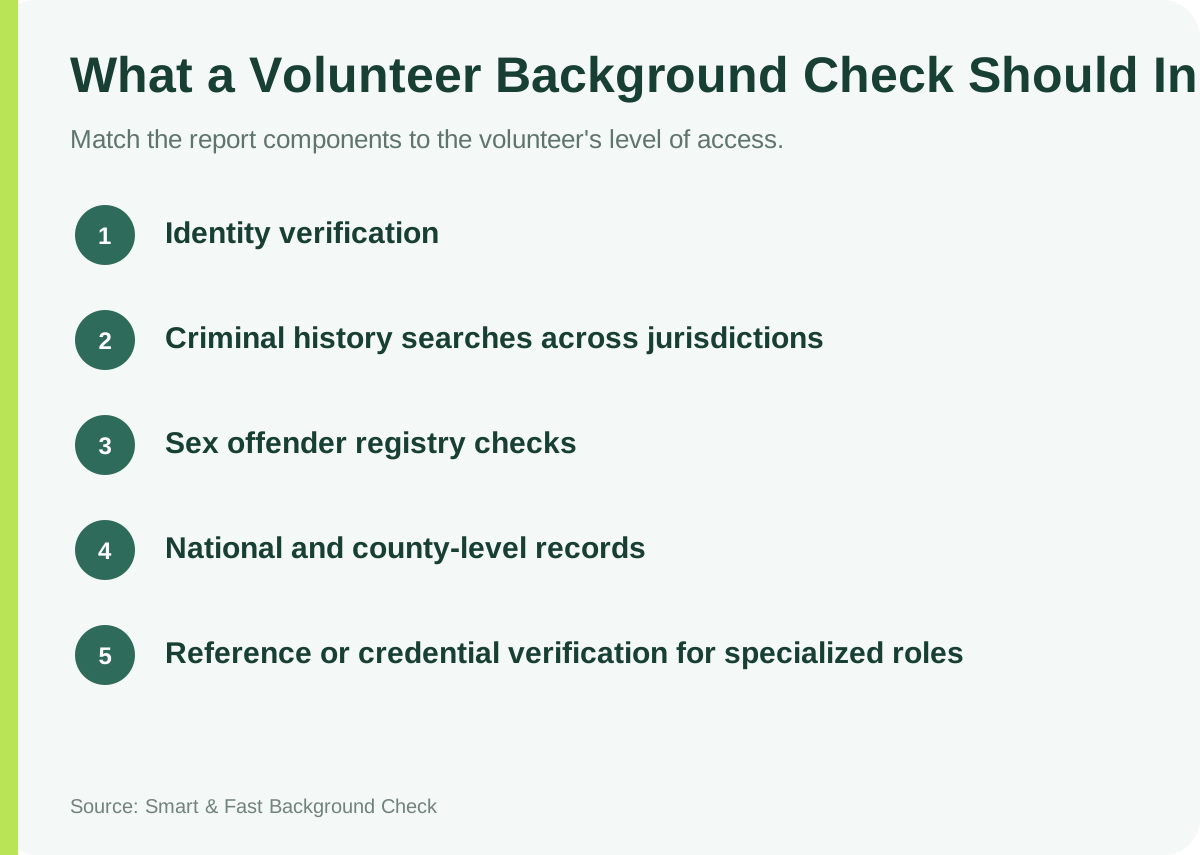
A comprehensive report should verify identity and surface relevant history. It should also match the level of access a volunteer will have.
Here are the core components most organizations rely on:
Smart & Fast Background Check delivers accurate, comprehensive reports built from verified data, so the results you act on are dependable, as described on the homepage.
A one-time festival greeter needs less scrutiny than a mentor working alone with a child. Right-size your screening.
High-contact roles deserve deeper checks. Low-contact roles can use lighter, faster screening.
Flexible checks for different needs let you scale coverage without overpaying. That flexibility keeps volunteers moving and budgets intact.
Rule of thumb: the more access, the deeper the check.
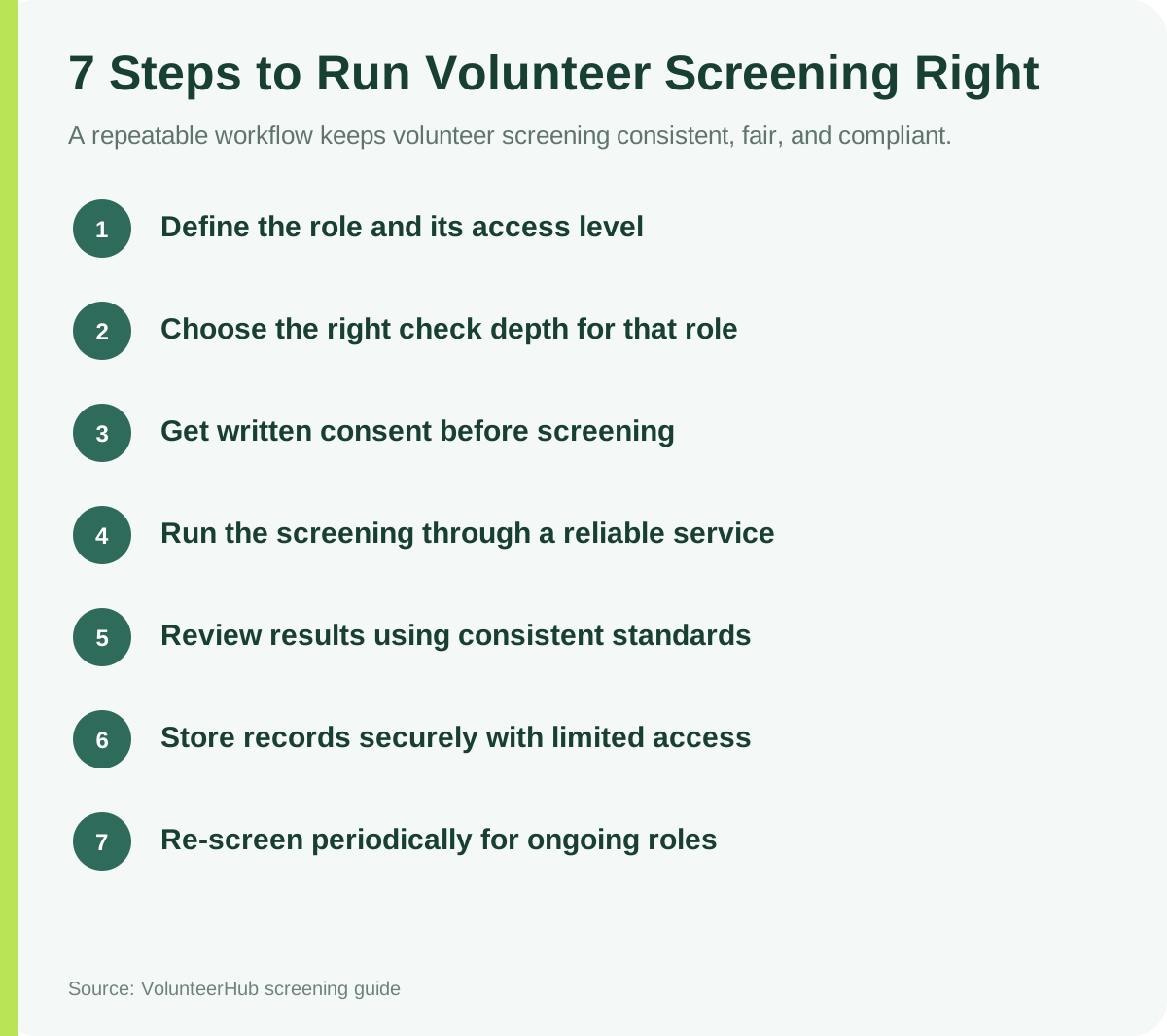
Process beats guesswork. A repeatable workflow keeps you compliant and consistent.
Here's where the rubber meets the road: a clear step-by-step system.
Consistency also protects you legally. When you screen everyone the same way, you reduce claims of unfair treatment.
Use this sequence as your backbone:
This structure mirrors the guidance from VolunteerHub's eight-step screening guide, which emphasizes structured, repeatable measures.
Never run a check without permission. It's both a legal requirement and a trust builder.
Explain what you're checking and why. Transparency turns a scary step into a shared safety commitment.
A short, plain-language consent form does the job. Keep it simple and honest.
Decide your standards before you see any results. Write them down.
That way, decisions are based on policy, not gut feelings. Consistency defends you against bias claims.
Same rules for everyone, every time.
Speed means nothing if it breaks the law. Compliance protects your organization and the volunteer.
Let's be blunt: compliance is not optional, and mistakes here are expensive.
When you use a third-party service to run background checks, the Fair Credit Reporting Act applies. That means specific steps around disclosure, consent, and how you handle negative results.
The basics look like this:
A compliance-focused provider builds these protections into the process. That's the difference between a report and a liability.
You don't have to become a legal expert overnight. A strong service handles the heavy lifting.
Smart & Fast Background Check focuses on clear, comprehensive, FCRA-compliant reports delivered fast. That combination reduces both risk and delay.
When the process is built correctly, you get speed and safety together. You shouldn't have to choose.
Compliance is the guardrail that lets you move fast with confidence.
Many leaders assume fast checks are sloppy checks. That's a myth worth killing.
Here's the part that changes everything: modern technology delivers both.
The right provider pairs advanced technology with meticulous research. The result is accuracy you can count on, delivered when you need it.
Smart & Fast Background Check delivers reports in hours, not days, drawing on verified data from trusted sources, as noted on the company homepage.
Most of our reports return in 24 to 48 hours without cutting corners on compliance. That means you onboard eager volunteers before their enthusiasm fades.
Volunteers are motivated when they sign up. Make them wait two weeks, and many drift away.
Slow screening is a silent recruitment killer. Fast, accurate checks keep your pipeline full.
Speed also matters during surges. Disaster response, seasonal events, and sudden campaigns demand quick vetting.
Fast screening protects both safety and momentum.
Repeat checks frustrate volunteers who serve many groups. Portable profiles solve this friction.
Some providers let volunteers carry a verified safety record across every organization they serve, without repeat checks or costs, according to Checkr.
That approach reduces cost and speeds re-engagement. It respects the volunteer's time.
Not every provider fits every organization. The best choice depends on your size, roles, and pace.
So how do you separate the strong providers from the rest? Ask sharper questions.
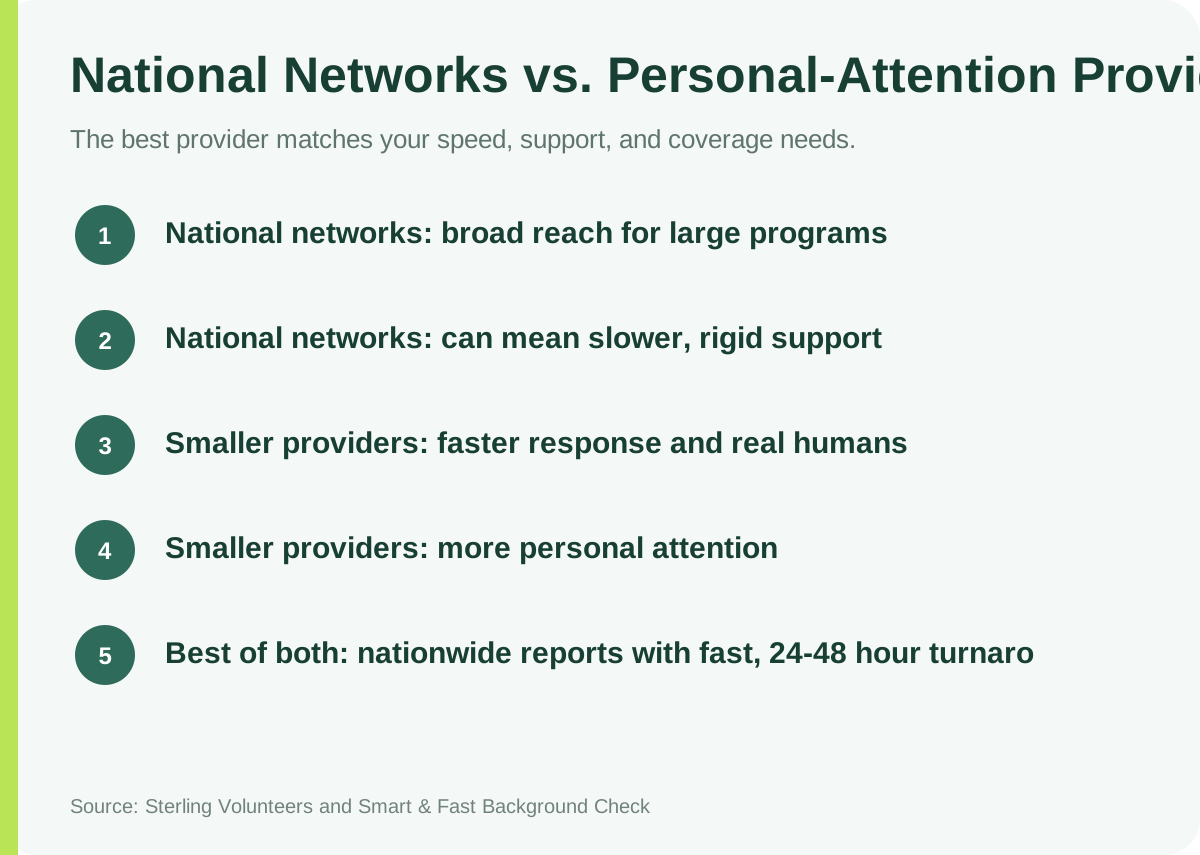
Big national vendors serve massive networks well. Smaller, responsive providers often deliver more personal attention and faster answers.
Use these questions to compare options:
Large platforms like Sterling Volunteers mobilize vetted volunteers for nonprofits and service organizations at scale. That reach is valuable for national programs.
But scale can mean slower support and rigid processes. Smaller providers often move faster and answer the phone.
Smart & Fast Background Check blends both worlds. You get the personal attention of a smaller provider with accurate, comprehensive, nationwide reports.
Choose the provider whose speed, support, and scope match your mission.
Watch for vendors who overpromise timelines they can't hit. Watch harder for those vague about compliance.
If a provider dodges questions about data sources, walk away. Verified data is non-negotiable.
Also avoid services with no real support channel. When a report is confusing, silence is dangerous.
Knowledge without action is just trivia. Let's turn this into a plan you can run this week.
Here's your simple path from uncertainty to confidence.
Start by listing every volunteer role and its access level. Then map the right check to each one.
Next, write your consent form and your decision standards. Consistency starts before the first check runs.
Finally, pick a provider that pairs speed with compliance. Run a small pilot to test turnaround and support quality.
Ready to protect your people without slowing down? Explore Smart & Fast Background Check and start with a role-based screening plan.
Picture a food bank onboarding 40 seasonal volunteers before the holidays. Every day of delay means empty shifts.
With role-based checks and 24-to-48-hour turnaround, they screen volunteers as fast as they apply. Nobody waits, and nobody unsafe slips through.
That's the payoff of getting screening right. Safety and speed, working together.
Yes, especially for roles involving children, seniors, or vulnerable adults. Screening confirms whether a volunteer can be trusted with your mission, as VolunteerHub explains.
Even low-contact roles benefit from basic identity checks. It protects everyone involved.
Turnaround varies by provider and check depth. Smart & Fast Background Check typically delivers reports in 24 to 48 hours without cutting corners on compliance.
Faster options exist for simple checks. Deeper searches may take longer.
When you use a third-party service, FCRA obligations apply. That includes disclosure, written consent, and adverse action steps.
A compliance-focused provider builds these protections into the process. That keeps your organization protected.
Sometimes. Some services offer portable profiles so volunteers carry a verified record across organizations, per Checkr.
Otherwise, plan for periodic re-screening. Ongoing roles deserve ongoing verification.
A great volunteer background check service protects your people, your mission, and your reputation. It does this without draining your time or budget.
Remember the core moves: match checks to roles, get consent, apply results consistently, and stay compliant. Then choose a provider that delivers speed and accuracy together.
You don't have to trade safety for speed. With the right partner, you get both.
Take the next step today. Start your volunteer screening plan with Smart & Fast Background Check and build a safer organization fast.
Volunteers and paid staff both need vetting, but the context differs. Employees often undergo credit checks and employment verification tied to job duties. Volunteers usually need identity, criminal, and registry checks matched to access level.
The legal thread is the same: FCRA applies when a third-party service runs the report. Whether the person earns a paycheck or donates their time, disclosure and consent are required. Don't assume volunteers fall outside the rules.
The biggest practical difference is speed pressure. Volunteers can vanish during long waits because there's no salary anchoring them. That makes fast, compliant turnaround even more critical for volunteer programs than for many hiring pipelines.
Some volunteers bristle at background checks, reading them as a lack of faith. Reframe the conversation around shared protection, not suspicion. You're safeguarding the people they'll serve and the volunteers themselves.
A simple script helps: "We screen everyone, including our board and staff, because the families we serve deserve it." Universal application removes the sting. Nobody feels singled out when the rule applies to all.
Point to the mission, too. Donors, grantmakers, and partners increasingly expect documented safety practices. Screening isn't a barrier to service—it's what keeps your doors open.
Even a solid process hits friction. Knowing the usual snags helps you keep volunteers moving instead of stalling in limbo.
A hit doesn't automatically disqualify someone. Review the record against your written standards and the role's access level. A decades-old, unrelated offense may pose no risk for a low-contact position.
Follow adverse action steps if you decide to decline. Provide a copy of the report and a summary of rights, giving the volunteer a chance to dispute errors. This protects both the individual and your organization.
Document your reasoning every time. Consistent, policy-based decisions defend you against claims of unfair treatment and keep your program credible.
Sometimes a name or date of birth doesn't match cleanly. Ask the volunteer to confirm their details and provide additional identifiers. Small typos on a consent form cause more delays than actual problems.
A responsive provider helps resolve mismatches quickly rather than leaving you guessing. That support is exactly why vendor responsiveness belongs on your comparison checklist.
A volunteer already screened elsewhere may resist starting over. Explain that check standards and coverage vary between organizations. Your program's requirements may differ from another group's.
Where portable profiles exist, volunteers can carry a verified record across organizations without repeat costs, per Checkr. Where they don't, periodic re-screening keeps ongoing roles current and safe.
There's no universal deadline, but ongoing roles deserve ongoing verification. Many organizations re-screen every one to two years, especially for volunteers working with vulnerable populations.
Tie re-screening to role and risk. A weekly youth mentor warrants more frequent checks than an occasional event greeter. Build the schedule into your policy so it happens automatically, not by memory.